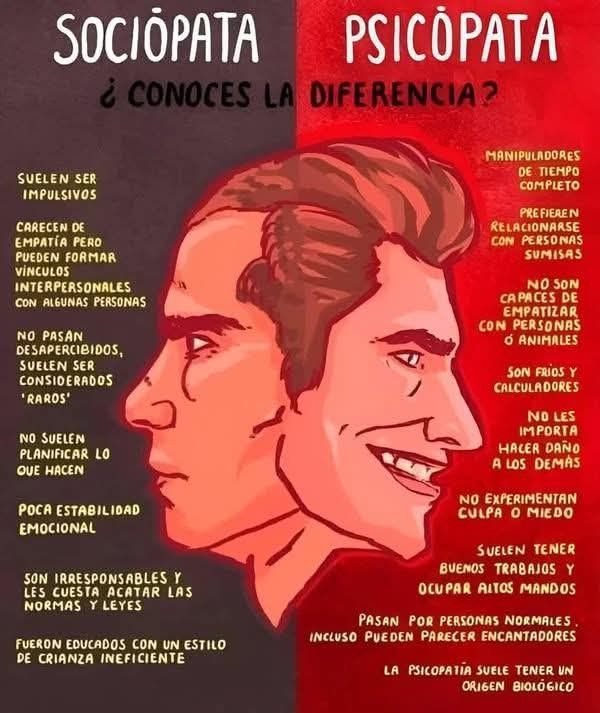
today I'll be talking about the differences between sociopaths and psychopaths. I chose this topic mainly because these kinds of psychological concepts attracts my attention. I hope it appeals you too but even if it doesnt, it will after this blog.

First, I want to point out that in psychiatry, the official diagnostic system used is Antisocial Personality Disorder. In other words, there is no clear distinction in clinical psychology. In DSM-5, "psychopath" or "sociopath" are not listed as separate diagnoses. Technically, neither psychopath nor sociopath is an official diagnosis. Both are popular terms generally used to describe antisocial personality traits. However, some researchers in psychology and criminology use the two concepts to describe different tendencies. Today, I will discuss these different tendencies.
Sociopaths
Firstly, sociopaths' behavior is more erratic and often driven by impulses. Therefore, they may experience outbursts of anger and exhibit self-harming behavior or harmful behaviour towards others. They may be more socially isolated and struggle to form relationships. However, despite all this, they are not devoid of empathy and can sometimes form bonds with certain people. They may exhibit behaviors such as harming animals in childhood, and the root of this personality disorder lies in environmental factors (trauma, difficult childhood).However, genes are also needed for these traits to emerge through environmental influences.

Psychopaths
Psychopaths have very weak empathy and have extreme difficulty understanding the feelings of others, which is why they rarely form emotional bonds. They may be more manipulative in their social lives, appear more functional within society, and sometimes even be quite charismatic. Compared to sociopaths, psychopaths act more controlled, behave in a planned manner, and may appear “normal” from the outside. All these characteristics make them excellent (!) managers. Such individuals are often successful in finance, business, and marketing sectors. They can even rise to high-level management positions such as CEO. However, this personality disorder is rooted in more biological and genetic factors. In other words, while sociopathy may develop later in life, psychopathy is mostly innate.
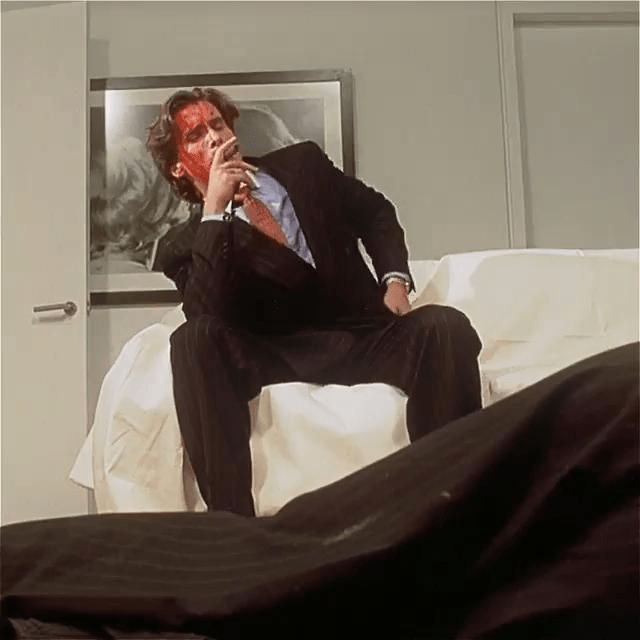
🤡Examples from movies👔
For example, the character Patrick Bateman in American Psycho appears on the outside to be a successful, charismatic, and socially well-adjusted investment banker. However, as the film progresses, it becomes clear that he is almost completely insensitive to the feelings of others and has no difficulty manipulating people; these characteristics align with those frequently described for psychopathic characters. In contrast, the Joker character, particularly in The Dark Knight, exhibits far more chaotic, impulsive, and unpredictable behavior. Even when Joker has plans, his actions often appear explosive and erratic; this is considered closer to the character type defined as a sociopath in popular narratives. Joker has become a sociopath due to the society he lives in but this does not mean he lacks empathy. However, Patrick Bateman most likely has had this personality disorder since birth, and this has positively impacted his life, at least in terms of his career.
Conclusion
In conclusion, while the differences between psychopaths and sociopaths are often not clearly defined, these two concepts can help us understand the different tendencies in how people empathize, control their behavior, and interact with society. In popular culture, characters like Patrick Bateman represent the more controlled and manipulative type of psychopath, while characters like the Joker evoke sociopathy with their more chaotic and impulsive behavior. However, in real life, human behavior doesn't fit into such simple categories; psychology often consists of gray areas. Therefore, I believe it's healthier to view these concepts not just as labels, but as tools for understanding empathy and human behaviour.


Leave a comment