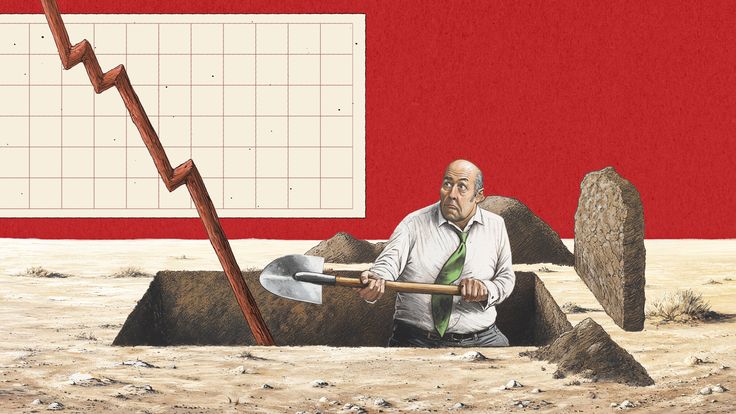
You probably have an idea of the long-term damage debt can cause. Yet, despite this, you may likely find yourself frequently burdened with debts that need to be repaid. Perhaps you're making erratic decisions for the sake of momentary pleasure. Or maybe you're motivating yourself to borrow by telling yourself, "I'll pay it back later anyway." Whatever your reason for borrowing, today we'll uncover the underlying facts on the ground.
Before I begin, I want to clarify that by “borrowing” here I’m not referring to taking on debt for long-term investments or education, but rather borrowing for products purchased impulsively and without much thought.
Rationality
If we were truly rational beings, we wouldn't be discussing this topic today because we would know how to maximize utility. By maximizing utility, I mean a person choosing the option that provides them with the greatest benefit among all the available choices. However, since we are generally driven by emotions, we prioritize short-term expenditures, leading to spending that we may later regret. For example, a person may calculate the interest on a loan, the stress it will create in the future, and the long-term losses, but still choose to spend their money on something more useless. If we were truly capable of "maximizing utility," we wouldn't accept a long-term cost for a short-term pleasure.
Future self
The future self is our future self, paying off debts and bearing the cost in one year or five years from now. But the problem is, the human brain doesn't truly perceive this person as "itself." Our minds create two "selves": the future self is abstract, distant, and uncertain; the present self is the one that feels, desires, and spends. Therefore, today's pleasure seems very real to us, while the future cost appears vague and emotionless.
We perceive our future selves as almost strangers because we don't feel their pain now, nor do we experience their fatigue and stress in the present. Our brain trivializes what it doesn't feel. People don't realize they're harming themselves when they get into debt because they don't feel that the person they're harming is "themselves."
Behavioral economics
It is insufficient to explain debt solely in terms of numbers, interest rates, or income-expense imbalances. Because debt is also a psychological and even a cultural behavior. The dopamine effect accompanying instant gratification, combined with the "let me be happy now, I'll think about it later" mentality, makes the future cost fade from the mind. Social media further accelerates this process: it creates a world perception of constant consumption, constant acquisition, and the normalization of those kinds of behavior. In such an environment, borrowing ceases to be an individual exception; it becomes a learned, encouraged, and even normalized habit. For example,a person who struggles to make ends meet on a minimum wage might consider buying an iPhone 17 and sacrificing meals for that reason.
Is it just an individual weakness?
Absolutely not. Banks and financial institutions have long known that individuals are prone to instant gratification and mentally underestimate future costs. That's why credit cards are designed with a "buy now, pay later" mentality; installment, minimum payment, and deferment options make the true cost of debt invisible. Interest rates are often presented as small percentages, while the long-term accumulated burden is pushed into the background. The system knows the individual's weaknesses and operates in a way that silently exploits them.
At this point, explaining borrowing solely in terms of a lack of individual will would be deficient; because decisions are made within a structure that takes human psychology into account and generates profit from it.
Conclusion
Viewing debt as merely an individual mistake or carelessness oversimplifies the problem. People aren’t stupid for being in debt; they simply don’t always behave rationally. The idealized model of the rational human being in classical economics fails to account for the human tendency towards immediate gratification, the weak connection to one’s future self, and the incentives of the system in which one finds oneself. The real question arises here: Are we dealing with an economic system that survives despite human nature, or a system designed to recognize and address human weaknesses, the cost of which is borne by individuals? The answer to this question determines how we should understand debt.

Leave a comment