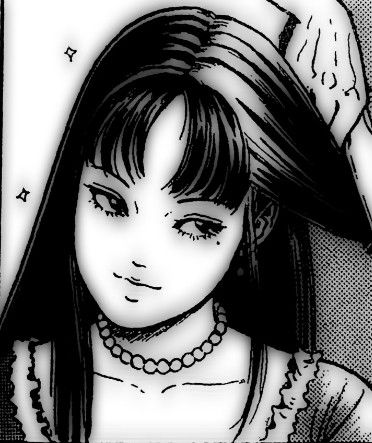
Today we'll be having an in-depth discussion about the manga "Tomie," by Junji Ito which I recently finished, so buckle up because I'll be talking about topics that are more difficult to grasp than in my other blogs.
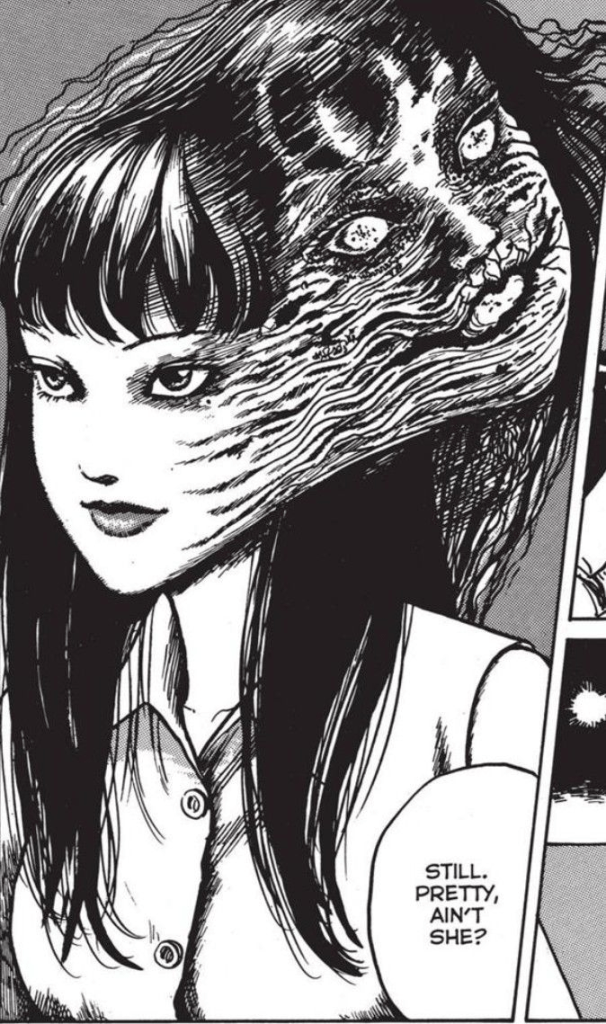
To briefly summarize the book without giving away too many spoilers, Tomie, a high school girl, tells her teacher on a school trip that she likes him, and her boyfriend overhears this. When he starts to get close to her, she falls off a cliff. Even though she's not dead yet, her classmates, led by the teacher, dismember her. Despite this, Tomie returns to school the next day, surprising everyone. After this incident, every guy who encounters Tomie loses control because of her beauty and impulsively tries to kill her, but each time Tomie manages to come back to life.

I know Tomie isn't an angel either; she has a lot of ugly sides, but we're not going to talk about that today.
The fear of the uncontrollable woman and feminism
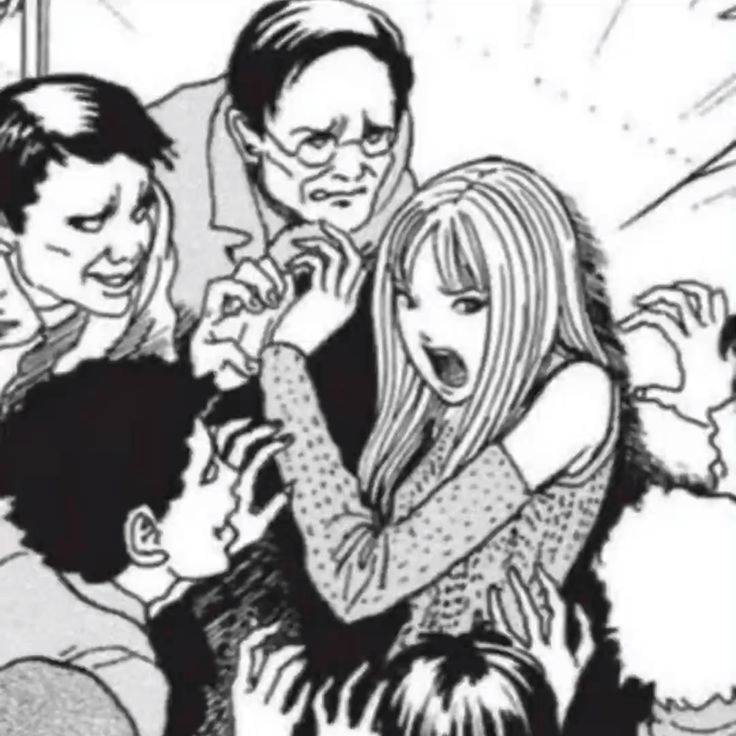
In the Tomie manga, the fear stems less from Tomie’s actions and more from the reactions of the men towards her. The moment the male characters see Tomie, they desire her, want to possess her, and lose control, attempting to destroy her.
This cycle reflects a situation frequently discussed in feminist theory: Patriarchy declares the woman it cannot control as “dangerous.” Tomie’s portrayal as a “monster” stems not from her essence, but from the meaning the male-dominated order has imposed on her.
Male gaze
Laura Mulvey's concept of the male gaze is quite explanatory for Tomie. Tomie is a figure constantly looked at, watched, and desired. However, unlike the classic "passive woman" representation, Tomie repels the gaze, manages and controls men's desires, and does not fixate herself as an "object." This is precisely why she is threatening. The problem for the patriarchy is not that Tomie is beautiful; it is that she is beautiful but does not obey the desires of men.
The metaphor of violence: the splintered female body
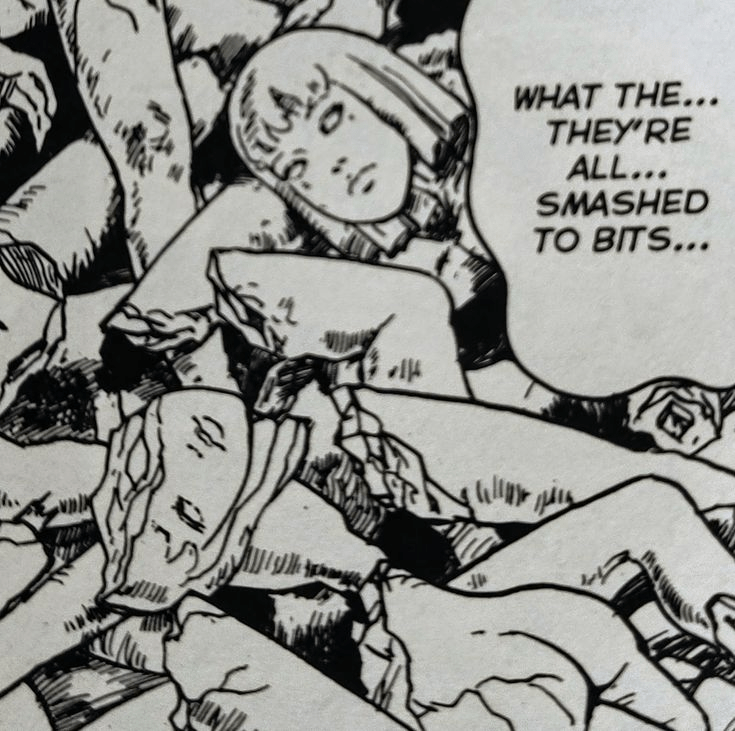
Tomie is repeatedly subjected to attempts of destruction. This recurring violence parallels the historical control, division, and appropriation of the female body. Approaching this cycle of violence from a feminist perspective, we can say that Tomie returns after each attempt to eliminate and remove her completely. This represents the failure of patriarchy’s claim to absolute control over the female body. The female body cannot be silenced or permanently eradicated.
Demonizing Tomie
Tomie is portrayed in the book as manipulative, selfish, and emotionally destructive. But the real question is: why are these same behaviors presented as "weakness" or "human nature" in male characters, while they are coded as "evil" in Tomie? This is a modern horror version of the classic "femme fatale" narrative: male desire is triggered, and then the woman is blamed for that desire.
Femme fatale
At this point, I think I need to elaborate on the concept of the femme fatale. The word femme fatale literally means “deadly woman.” In literature, cinema, and visual culture, she is a figure where male desire and fear intersect. From a feminist theoretical perspective, this concept is interpreted as a narrative imposed by patriarchy on women it cannot control.
A femme fatale is a female character who uses her sexual attractiveness to influence and manipulate men, often leading them to ruin in the end. Men suffer, but they never look for the fault in themselves; they blame the woman. The figure represents how a woman’s role as an active subject of desire is deemed “dangerous.”
Following the Industrial Revolution, women began to enter the public sphere, the male-dominated order was shaken, and it was precisely during this time that the "femme fatale" figure became widespread in literature. Women's freedom created a crisis for the male-dominated order, and women were punished in narratives. At the end of the stories, they die, are imprisoned, or are morally "cleansed." The patriarchal order, at this point, sends us the message: "You can be independent, but you will pay the price."
Nasty patriarchy
What is unacceptable to the patriarchy is that the woman is not the object but the subject of desire, that she acts outside the male order. Therefore, the narrative does this: It makes the woman desirable -> the man goes after/pursue her -> the order is disrupted -> the woman is punished. In fact, this is a "disciplinary mechanism".
Tomie is the horror form of the classic femme fatale. She seduces men but ultimately cannot be punished, killed, or silenced. Therefore, Tomie represents the point where the femme fatale narrative makes partriarchy fail.
Hospital chapter
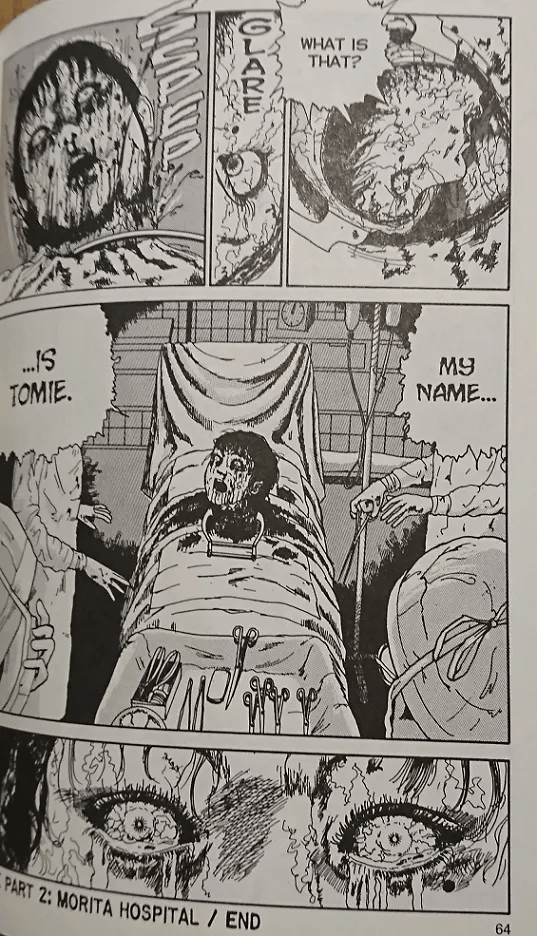
In the Tomie book, the chapter in the hospital where Tomie “heals” a sick girl by transforming her into herself is one of the most intensely symbolic scenes in the manga. At first glance, what Tomie is doing is transforming a body deemed “ugly,” sick, or deficient into her own form, making it conform to what society considers “ideal.” However, this “healing” is not a true cure, but a normative correction.
This chapter is disturbing because the enforcer of the violence is not a man, but a woman. Tomie is not outside the patriarchal system; she has gained power from within it and uses that power against other women. As the girl in the hospital recovers, she loses her face, her body, her identity. But the metaphor of “recovery” also ensures the patient’s survival. This transformation symbolizes how society’s “ideal woman” model operates by destroying individuality. Tomie’s healing of the girl in the hospital ward by transforming her into herself symbolizes how a woman’s body is considered “sick” unless it conforms to patriarchal norms, and how she is forced to relinquish her individuality to gain acceptance.
Monotyped femininity
Tomie's reproduction is critical here because she can multiply from the fragments she splits into and within the other bodies she inhabits. For this reason, she creates countless women with the same body. Never interpret this as the spread of female power, because it is not; this clearly depicts the homogenization of women.
This scene shows us that Tomie is a threat to the patriarchy, but at the same time, she is the patriarchy's most perfect product.
This contradiction is what makes Tomie such a fruitful manga to look from a feminist perspective.
The real reason for fear
In Tomie, the fear stems not from Tomie’s beauty, but from men’s inability to control themselves and their inherent fragility. Tomie never dies because the system that seeks to destroy her cannot survive without confronting its own contradictions. Tomie is not horrifying because she survives. She is horrifying because patriarchy cannot make her disappear.

Leave a comment