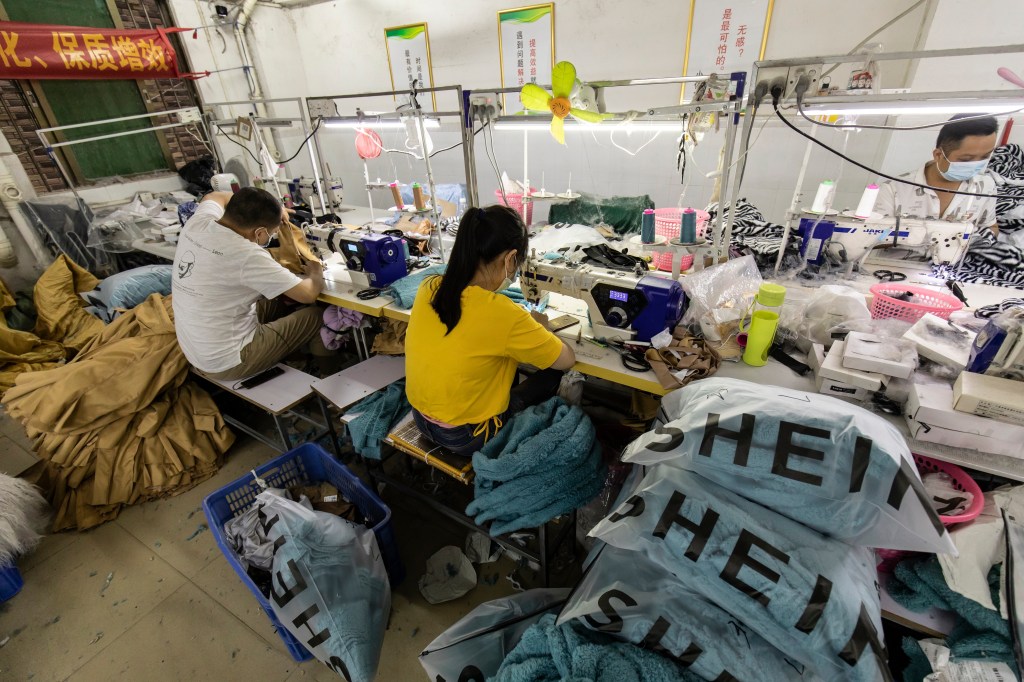
One of my closest friends, recently gave me an idea for today’s topic based on few videos she had watched about Shein using child labor, and I thought it would make a great content for my blog. So today I’ll be talking about Shein’s use of child labor. You’ve probably heard rumors about Shein employing child labor before so in case you’re wondering if those rumors are true, I’ll try to explain the basis of them.
Shein is primarily a product supplier, a clothing brand originating in the Far East, and is also known for its success in e-commerce. However, it recently faced a lot of criticism due to allegations of employing child labor.
Definition of child labor and international standards
"Child labor" is often defined as work that prevents children from experiencing their childhood, diminishes their potential and dignity, and is harmful to their physical and mental development. According to International Labor Organization, child labor includes the following:
- Work that is dangerous or harmful to children in terms of mental, physical, social or moral aspects
- Work that prevents them from regularly attending school, thus depriving them of their right to education and causing them to leave school early
- Harsh work that children are forced to do alongside their schooling.
In addition, the International Labour Organization (ILO) generally defines child labor as the employment of children under the age of 15. Even if a factory describes a child as "just helping," official inspections can still classify this as child labor thanks to this criteria.
Shein’s supply chain incidents and official statements
Just because a t-shirt is cheap doesn’t mean its production process is “cheap.” Shein, one of the world’s fastest-growing fast-fashion brands, has admitted to detecting cases of child labor in its supply chain, according to its own sustainability reports. According to Shein’s 2023 Sustainability and Social Impact Report, audits that have been conducted that year uncovered two cases of child labor, and relationships with the suppliers involved fell into abeyance.
This situation continued in 2024. According to information Shein presented to the UK Parliament, approximately 4,300 audits revealed two more cases of child labor in its supply chain; one was aged 11 and the other 15. The company identified these cases as "child labor" and announced that it had terminated its cooperation with the relevant suppliers.
Differences between policy and practice
Although Shein states in its official documents that it has adopted a "zero child labor" policy, audit results show that this policy is not fully implemented in practice. According to the company's own reports, child labor cases were detected in its supply chain in 2023 and 2024, and it was announced that work with the relevant suppliers was stopped. This situation reveals a gap between the existence of the policy on paper and its implementation in the field.
Transparency, labors’ rights and media reports
Shein claims in its reports that as audits increased, the rate of detected child labor cases dropped from 1.8% to 0.1%. In my opinion, its accuracy is debatable because Shein works with many suppliers, and its audit processes largely rely on its own reports, raising questions about the adequacy of independent oversight and therefore its reliability. Furthermore, if you look at sources about Shein, you will see that questions such as "How many factories, where, and how often?" are often not clearly answered.
In addition, journalistic investigations and documentaries paint a different picture than company reports. Reports published by some media outlets and investigative journalists indicate that long working hours and poor working conditions are common in some production facilities.
What can we do
The Shein example shows that child labor in the fast-fashion industry stems not from accidental violations, but from a system built on low prices and high production speeds. While company policies are important, their effectiveness in supply chains is still debatable. Therefore, the responsibility lies not only with brands and suppliers, but also with institutions that need to conduct more transparent audits and consumers who need to question the production conditions behind low prices. A low price does not mean that a product is produced ethically. Therefore, we should avoid shopping from websites like Shein, whose suppliers and employees are unknown and which lack transparency.
I hope you enjoyed my blog writing and learned something from it. New Year's will probably come before my next post, so I wish you all a merry christmas. I'll leave the link to the videos my friend watched, in case anyone was wondering. May we all have a healthy, happy year filled with loved ones and see you next year:))


Leave a comment